Haworthia Attenuata Vs Fasciata

Haworthia attenuata vs fasciata
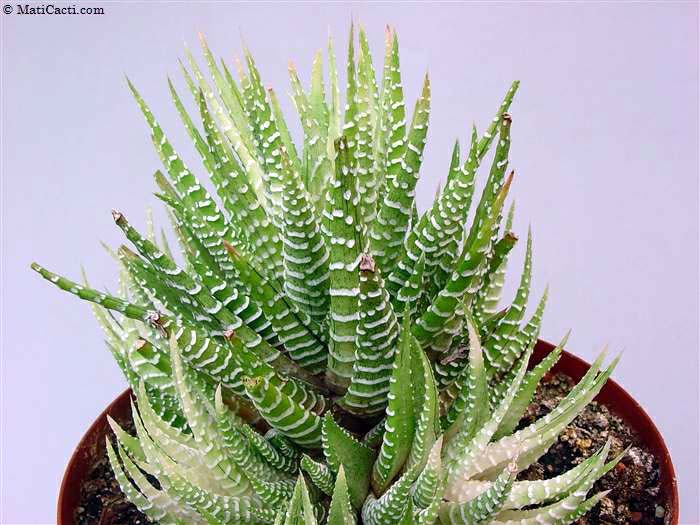
The differences between the two are subtle, but there's an easy way to tell. The inner leaves of Haworthiopsis fasciata “Zebra Plant” are smooth, where Haworthiopsis attenuate has bumpier leaves. “Zebra Plant” also has fatter leaves than Haworthiopsis attenuate.
What is the difference between Haworthia and Haworthiopsis?
The new ending for the name is from the Greek Ópsis for appearance, indicating these plants appear like Haworthia. The most noticeable physical difference is the thicker and harder epidermis or outer covering of the Haworthiopsis leaf when compared to Haworthia.
What is the common name for Haworthia fasciata?
Haworthiopsis fasciata (Little Zebra Plant, Zebra Haworthia, Zebra Plant) | North Carolina Extension Gardener Plant Toolbox.
What is Haworthia with white dots called?
Haworthia is recognizable by its pearly warts (it's cuter to think of them as polka dots), and is commonly called zebra cactus, pearl plant, star window plant, or cushion aloe.
How big can a Haworthia fasciata get?
Haworthia fasciata or also called as Zebra Plant are delicately small succulent houseplants, reaching up to 5 to 8-inches only in height. They have thick, dark green leaves with bumps of white tubercles on the outer surface, and are clustered together giving it a “Zebra” effect.
Is it rare for Haworthia to flower?
As earlier explained, Haworthias flowers about once a year. They may do this either during the summer or autumn season. Of course, if the conditions are not right, the plant may not bloom at all. Also, the flowering time may vary from one variety of the plant to the other.
Should I remove Haworthia pups?
When to Remove Haworthia Pups for Propagation. Don't start removing the babies as soon as you see them appear. Be patient and wait long enough for the babies to grow their own root systems and be able to survive on their own. Wait till they are at least about 2″ tall before removing them from the mother plant.
How long do haworthia Fasciata live?
All About Haworthia Attenuata The Haworthiopsis attenuata succulent is a slow grower that looks like an aloe plant, and can live up to 50 years! It belongs to the Asphodelaceae family of succulent plants, and is native to the Eastern Cape province of South Africa.
What does Haworthia fasciata mean?
Haworthiopsis fasciata, formerly Haworthia fasciata, is a species of succulent plant from the Eastern Cape Province, South Africa. The species is rare in cultivation; most plants that are labelled as H. fasciata are actually Haworthiopsis attenuata.
What is the benefit of Haworthia fasciata?
Purifies Air: The other benefit is universal in all the plants but usually, these species are linked with purifying air quality near you as they sit inside your room and bring more oxygen for you.
How do you take care of Haworthia fasciata?
Water every 2-3 weeks in direct light, allowing soil to dry out between waterings. Expect to water more often in brighter light and less often in lower light.
How do I identify my Haworthia?
Look for a rosette of succulent leaves. This is the most identifying feature of these plants. They are usually thick, succulent, and arranged in tight rosettes that remain low to the ground. Haworthias typically have pointy, triangular leaves.
Do Haworthia like to be crowded?
Repotting and propagating haworthia succulents You will not need to repot your haworthia plant often. In fact, they like being quite snug in their pots.
Do Haworthias like deep pots?
Haworthias are excellent dish garden plants as well! Tip: Shallow pots are considered better than deep pots though some varieties like Haworthia reticulata have large roots that require slightly deeper pots.
Do Haworthia change colors?
For various reasons, Haworthia may turn from green to brown or reddish colour. This may or may not be bad news (it mostly isn't). So why do they change? Haworthia can turn from green to brown colour as a response to stress from the sun, seasons, temperature, water or even pot size.
Can Haworthia be in direct sunlight?
Although some Haworthia species can be found in full, bright sun, many live in more protected spots and therefore are adapted to thrive in partial shade (though few look their best without at least some direct sun or bright light). This makes Haworthias well adapted to lower light conditions found in homes.
What is the white fluffy stuff on my succulent?
Mealybugs usually look like a white cottony substance that can be found close to the new growth on your succulent. They will be on the stem, at the base of leaves or right in the middle of your plant on rosette types.
Do Haworthia like small pots?
The charm of Haworthias is in their small size, ease of growth, and the almost infinite variation of their delightful leaves. Haworthias rarely require a pot larger than 4-inches in diameter making them ideally suited for a bright windowsill.
How do you keep Haworthia plump?
Water thoroughly when you water, and allow excess water to escape the drainage hole(s), and allow the potting mix to dry out completely before watering again. The plant goes dormant in the summer, so keep watering down to a minimum during this time (just enough to keep the foliage from wrinkling or shriveling).
Why is my Haworthia growing tall?
Lack of Sunlight Succulents stretch out when they aren't getting enough sunlight. You'll first notice the succulent start to turn and bend toward the light source. Then as it continues to grow it will get taller with more space between the leaves.
12 Haworthia attenuata vs fasciata Images
Haworthia Fasciata Zebra Plant This plant comes in a 2 34 pot You
Pin op crasas

Haworthiopsis attenuata Super Zebra World of Succulents Zebra

Haworthiopsis attenuatahaworthiopsis fasciata

10 Best Indoor LowLight Succulents Low light succulents Low light

14 Best Indoor Succulents To Grow At Home Plants Planting succulents

HAWORTHIA FASCIATA cv Alba 90 cm groe Pflanze 2001 EUR 600

Zebra Haworthia Haworthiopsis Attenuata Haworthia Attenuata Etsy

Haworthiopsis attenuata var radula Hankey Dwarf Aloe World of

HAWORTHIA ATTENUATA HAKUJO Plants Succulents

haworthia attenuata variegata

Post a Comment for "Haworthia Attenuata Vs Fasciata "